Showing posts with label Requiem. Show all posts

Tuesday, 11 March 2014

Requiem - Abstracts #01

Already, this project has overcome the unenviable task of creating form from data, embarking on the task of creating art from numbers or mathematics. These technical challenges were intense and complex, far too complex for myself, and the work that Alan and Ethan have undertaken has been quite astounding. A real headache destroyed with some superbly clever scripting and scene setup. And from this, from these csv files, a set of curves have been born that directly translate to the creation of Requiem. From movement to music, data to sculpture, it is a project that seems so pure in its representation. Something so different from my usual practise. I will be writing more about some of this conceptual stuff soon, but my job now is to join the team as a artsy fartsy experimenter. I've stayed clear of the technical setup (not only because my brain lacks that capacity) because I wanted to approach from the outside, purely to experiment with the tools and setup created. Already, I've had some fascinating results, and I can see plenty more in the future. So, here is the first contact sheet for Requiem by myself.


The future of the project is still wonderfully open, with ideas and conclusions born from the act of creation. I'll be experimenting plenty more with different approaches and data sets, but for now, this demonstrates some initial creation from data. I'll also discuss how some of these were made, but for now, I'd like to keep the experimentation free from technical details. So, I guess, more soon. 

Tuesday, 28 January 2014

ACT Part 2: Verdi's Requiem @ ROH Purfleet: Another Sound Visualisation Challenge Begins!


High House Production Park, Purfleet

Following CGAA's successful participation in last year's ACT project, in which our students, staff and alumni collaborated to create an animation inspired by composer Darius Milhaud's 1923 ballet, La création du monde, we've been challenged by ACT once again to visualise classical music in new and speculative ways.  The piece in question is Giuseppe Verdi's mighty Requiem (1874), a musical setting of the Roman Catholic funeral mass.  Verdi's ninety minute Requiem is perhaps best known to most of us by the explosive Dies Irae or Day of Wrath:


On the evening of July 3rd and 4th at the Royal Opera House's High House Production Park at Purfleet, Verdi's Requiem will be performed live by an ensemble of 300 musicians - and beamed live via a screen into the Production Park's orchard.  Our mission is to devise an innovative way of visualising the music of the Requiem that will compliment and enrich this outdoor concert and bring new dimensions to Verdi's operatic masterpiece.


The Orchard

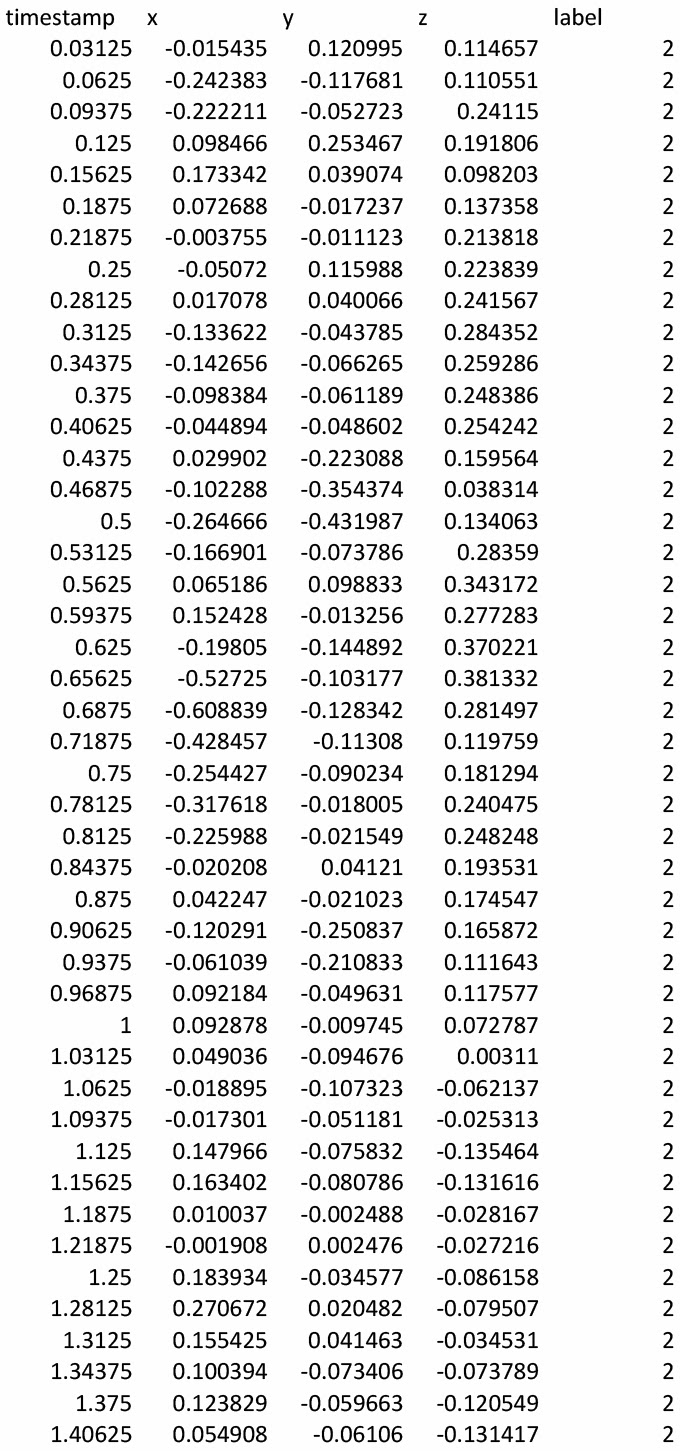
Work on this project began back in December 2013, when Pete Wallace of Butch Auntie fame travelled to Amiens, France with a very specific remit.  Pete's mission was to turn a live performance of Verdi's Requiem into raw data - not by recording the music itself, but rather by capturing the performance as experienced by its various participants.  Uninspiring as it may seem, the great long list of numbers below is a direct transcript of Verdi's Requiem, as generated from moment-to-moment by the gesticulations of the orchestra's conductor, Arie van Beek, who was wired up to Kinect technology for the duration of the performance.


Pete was similarly able to capture the Requiem via the activity of the lead cellist's arm and by the heart-rate of a member of the choir. In simple terms, Pete came back from Amiens with 'lightning in a bottle'; the vivacity and verve of Verdi-performed-live encompassed in a series of spread-sheets.

Our creative task now is to again let loose that vivacity, that verve - to translate these numerical expressions of music into something extraordinary.  It's early days, and the precise form our visualisations-of-Verdi may take on that July evening in the High House orchard are as yet unknown, but we think we'd like to manifest them physically.   Our thoughts - barely more than vague impressions at this stage - have turned to the kinetic sculptures of Alexander Calder and the fluid delicacy of tensile fabric structures:


What we do know is that we'll be using Maya, animation, and you - the CGAA community - to get us there. We know too that CGAA alumni Ethan Shilling is joining us for this project and will bring his considerable technical expertise and creativity to the mix.

Exactly what happens next is uncertain.  How exciting!  But what happens will happen here on the ACT blog, so watch this space for updates.  As of now, CGAA's Mission Verdi is go.